Automotive Diagnostic Tools for Car Repair: Understanding How They Work
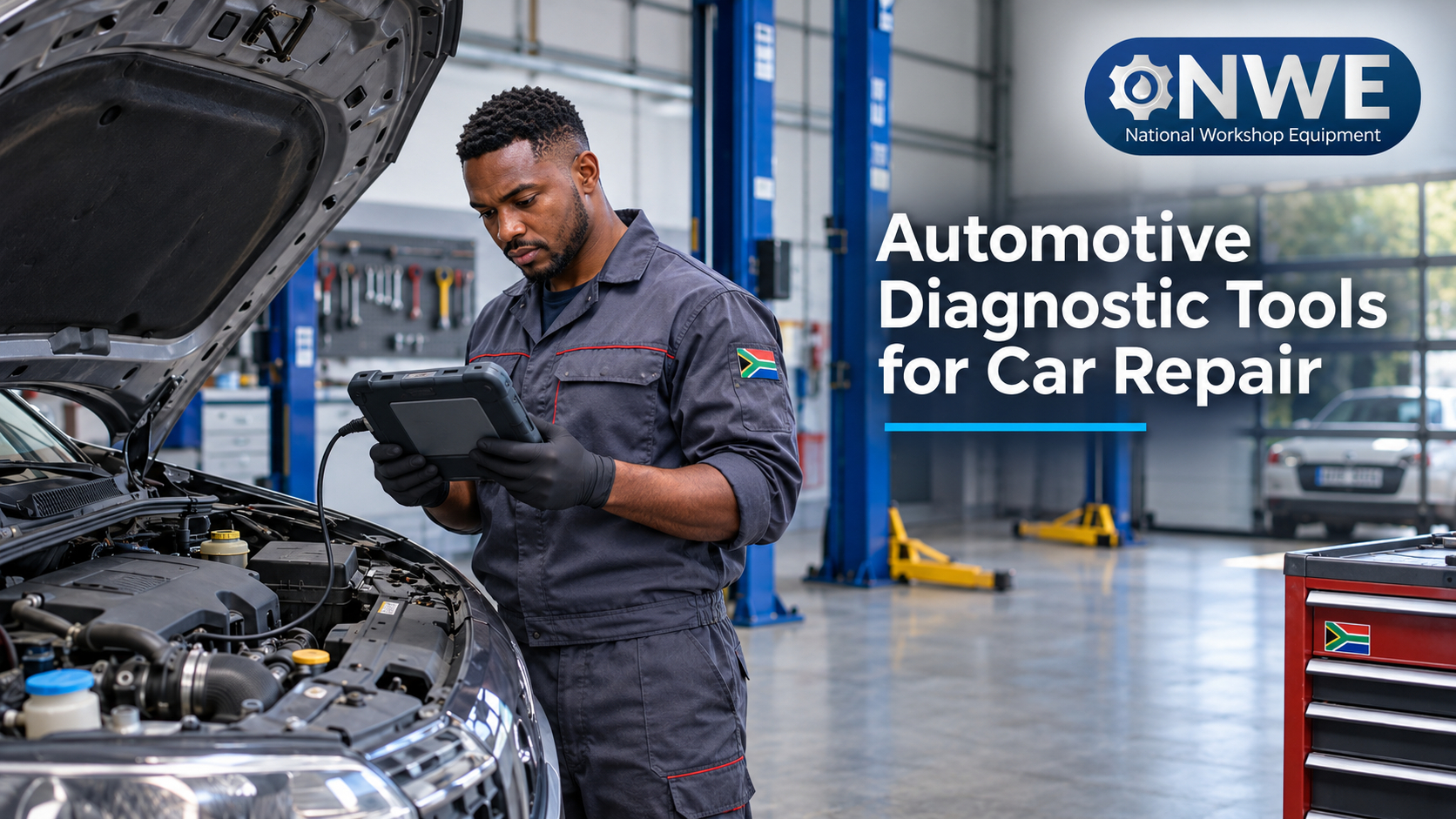
Modern vehicles are more than just engines, wheels and gearboxes. They’re packed with computers, sensors and electronic systems that constantly monitor how everything is working.
When something goes wrong, the problem isn’t always obvious. A warning light might appear on the dashboard, the engine might lose power, or the vehicle could start using more fuel than usual.
This is where automotive diagnostic tools come in.
These tools help mechanics understand what is happening inside a vehicle, making it easier to identify faults and decide what needs attention.
What Are Automotive Diagnostic Tools?
Automotive diagnostic tools are electronic devices that communicate with a vehicle’s onboard computer systems.
Think of them as a way for mechanics to have a conversation with a car.
When a vehicle detects a problem, its electronic control unit (ECU) may store a fault code. A diagnostic scanner can retrieve that information and help the technician understand which system needs investigating.
For example, a diagnostic tool might reveal an issue relating to:
- Engine performance or emissions
- Automatic transmission operation
- Anti-lock braking systems (ABS)
- Airbags and electronic safety systems
- Battery and charging systems
- Electronic sensors and wiring
However, a fault code doesn’t automatically tell a mechanic which part to replace. It provides a starting point for further testing.
OBD2 Scanners: The Starting Point for Vehicle Diagnostics
One of the most commonly used diagnostic tools is the OBD2 scanner.
OBD stands for On-Board Diagnostics. Most modern passenger vehicles have a diagnostic port, usually located beneath the dashboard, that allows compatible scanning equipment to communicate with the car.
Imagine your vehicle’s check engine light comes on. Instead of guessing what might be wrong, a mechanic can connect a scanner and retrieve the stored fault codes.
A basic scanner may help identify issues involving oxygen sensors, engine misfires or emissions-related systems. More advanced scanners can access additional electronic systems, depending on the vehicle.
Launch CRP239 Diagnostic Scanner
For example, the Launch CRP239 Diagnostic Scanner supports fault-code reading, live vehicle data and selected service functions. It illustrates how diagnostic equipment can go beyond simply reading an engine warning light.
Professional Diagnostic Scanners: Looking Deeper Into a Vehicle
As vehicles become more electronically advanced, workshops often need equipment that can communicate with multiple systems.
Professional diagnostic scanners can offer features such as:
Full-System Scanning
Full-system scanning allows technicians to check supported vehicle control modules for faults.
Live Data Monitoring
Live data monitoring allows technicians to view sensor readings while the vehicle operates.
Bi-Directional Testing
Bi-directional testing allows a compatible diagnostic scanner to command certain components to operate for testing purposes.
For example, if a vehicle’s cooling fan isn’t operating correctly, a technician may be able to use a compatible scanner to command the fan on and off.
This helps determine whether the issue lies with the fan, its electrical circuit or the system controlling it.
Service Functions
Professional diagnostic tools can also perform supported resets, calibrations and maintenance procedures.
Launch X-431 PRO3 APEX
The Launch X-431 PRO3 APEX is an example of a professional diagnostic platform offering full-system scanning, live data, bi-directional testing and supported ECU coding functions.
Not every function works on every vehicle, so checking vehicle-specific compatibility remains important.
Battery Testers: More Than Just Checking Voltage
A flat battery is one of the most common reasons a vehicle refuses to start.
But a battery showing a normal voltage reading doesn’t necessarily mean it’s in good condition.
A dedicated automotive battery tester can help assess battery health, starting performance and the charging system.
This can be particularly useful when a vehicle struggles to start in the morning but seems to operate normally later in the day.
Some battery testers can also check whether the alternator is charging correctly.
Launch BST-860 Battery Tester
The Launch BST-860 Battery Tester is designed for 12V and 24V applications and can generate printed battery test reports.
For workshops, this type of report can help explain battery-related findings to customers without relying on technical jargon.
Electrical Circuit Testers: Finding Hidden Wiring Problems
Not every vehicle fault is caused by a faulty sensor or computer.
Sometimes the problem is simply a damaged wire, loose connection, poor earth or faulty relay.
Electrical circuit testers help technicians investigate these issues.
For instance, imagine a vehicle’s headlights occasionally stop working. Replacing the bulbs may not solve the problem if the actual cause is a poor electrical connection.
An electrical circuit tester allows a technician to investigate power supply, continuity and earth connections.
Autel PS100 Intelli Probe
Equipment such as the Autel PS100 Intelli Probe can assist with voltage testing, circuit tracing and component testing.
Electrical tests should always follow the correct vehicle procedures, particularly when working near sensitive electronic control modules.
Tyre Pressure Monitoring Tools: Understanding TPMS
Many modern vehicles feature a Tyre Pressure Monitoring System, commonly called TPMS.
This system alerts drivers when tyre pressure is outside the expected range.
However, sometimes the warning light remains illuminated even after the tyres have been inflated correctly.
This could indicate an issue with a tyre pressure sensor, sensor battery or system configuration.
Specialist TPMS diagnostic tools can help technicians investigate these faults and carry out supported sensor programming or relearning procedures.
Autel MaxiTPMS ITS600
The Autel MaxiTPMS ITS600 provides TPMS sensor testing, programming and relearning functions for supported vehicles.
Correct tyre pressure remains important for tyre wear, handling and overall vehicle safety.
Why Diagnostic Tools Don’t Replace a Good Mechanic
One of the biggest misconceptions about vehicle diagnostics is that plugging in a scanner will immediately reveal exactly what needs replacing.
Unfortunately, it’s rarely that simple.
Consider a vehicle displaying an oxygen sensor-related fault code.
The sensor itself might be faulty, but the same code could also be associated with an exhaust leak, wiring problem or incorrect air-fuel mixture.
Replacing the sensor without investigating the underlying cause could mean spending money without fixing the actual problem.
A good technician combines diagnostic information with practical experience, physical inspections, electrical testing and manufacturer repair procedures.
The diagnostic tool provides information. The technician uses that information to find the problem.
How to Choose the Right Diagnostic Tool for a Workshop
Not every workshop requires the same diagnostic equipment.
A small general repair workshop might only need reliable fault-code reading, live data and common service resets.
A workshop specialising in modern European vehicles may require more advanced system access, coding and calibration capabilities.
Before choosing diagnostic equipment, it’s worth considering:
Vehicle Coverage
Which makes, models and model years does the workshop regularly service?
Diagnostic Depth
Is basic engine fault reading enough, or is full-system access required?
Maintenance Functions
Does the workshop need battery registration, electronic parking brake servicing or other resets?
Software Updates
How frequently is vehicle coverage updated, and are there ongoing costs?
Technical Support
Is assistance available when a vehicle or diagnostic procedure proves difficult?
For a broader understanding of the equipment available for different workshop applications, NWE’s professional diagnostic equipment range provides examples of different scanner capabilities.
The Future of Automotive Diagnostics in South Africa
Vehicle technology continues to evolve.
Hybrid vehicles, electric vehicles, advanced driver assistance systems and increasingly complex electronic networks are changing the way workshops diagnose faults.
Technicians are now expected to understand not only traditional mechanical systems but also software, sensors, electronic communication and calibration procedures.
For South African workshops, keeping up with these developments will become increasingly important as newer vehicles enter the local market.
However, newer technology doesn’t mean basic mechanical knowledge is becoming less valuable.
Understanding how an engine works, recognising electrical faults and following a logical diagnostic process will always remain essential.
Final Thoughts
Automotive diagnostic tools have become an important part of modern car repair.
From identifying engine faults to testing batteries, electrical circuits and tyre pressure sensors, the right equipment can help technicians investigate problems more accurately.
But technology is only one part of the process.
A reliable diagnosis still depends on understanding the vehicle, interpreting the information correctly and testing before replacing components.
Whether you’re an experienced technician, an apprentice or simply interested in how modern cars work, learning the basics of automotive diagnostics is a useful place to start.
Explore Automotive Diagnostic Equipment From NWE
National Workshop Equipment supplies professional automotive diagnostic equipment and workshop solutions for South African workshops.
Speak to NWE about your workshop requirements and explore diagnostic solutions suited to modern vehicle servicing and fault finding.
Durban: 031 709 3632
Johannesburg: 010 001 1493
WhatsApp: 060 012 5991
Website: www.nwe.co.za