• Skip to primary navigation
  • Skip to main content

NWE

Johannesburg:JHB: 010 001 1077 | Durban H/O:DBN H/O: 087 813 4553 | Whatsapp 060 012 5991

Hello, Login
0
R0.00
NWE Logo
×
SHOP ONLINE
  • Home
  • Shop Online
  • Services
  • Green Machine
    • About the Green Machine Waterless Car Wash System
      • Why Use Green Machine
      • What You Get In Your Green Machine
      • About The Wax
      • How It Works
      • Accessories
    • Green Machine Compact
    • Corporate & Retail
      • About Corporate & Retail
    • Motor Car Dealerships Leasing Options
  • About Us
  • Distributor Agent
  • Finance
  • Blog
  • Gallery
  • Contact Us
  • Videos

NWE

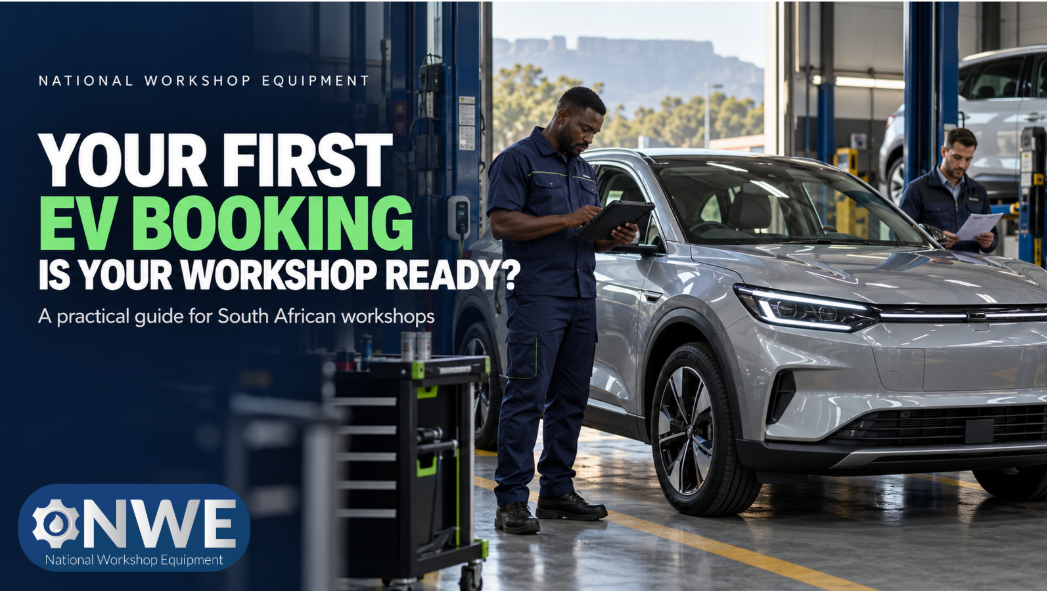
Your First EV Booking – Is Your Workshop Ready?

October 13, 2026 By Tyrone

Your First EV Booking: A Practical Guide for South African Workshops
https://nwe.co.za/wp-content/uploads/2026/10/EV-Workhop-Are-you-ready.png

The phone rings. A customer wants to bring in an electric vehicle with a warning light on the dashboard.

Before offering an appointment, your service adviser needs to know whether the workshop can handle that particular vehicle and fault. Who will assess it? Does your diagnostic equipment support the model? When should the job be referred to a specialist?

In our previous article, Electric Vehicles in South Africa: How Workshops Can Prepare for the Future, we explored training, safety and equipment. This follow-up looks at putting that preparation into practice, from the first enquiry to the final handover.

Start With the Booking Conversation

A useful assessment begins before the vehicle arrives.

Ask the customer for the make, model, year and registration or VIN, along with a clear description of the concern. Establish whether it is a battery electric vehicle, hybrid or plug-in hybrid.

Useful questions include:

  • What warning message appears, and can the customer send a photograph?
  • When did the problem start?
  • Does it happen while driving, charging or starting the vehicle?
  • Has the vehicle recently been repaired, involved in an accident or exposed to flooding?
  • Is the customer requesting routine maintenance or investigating a fault?

Record the answers on the job card. Give the technician enough information to assess the booking before promising a repair or completion date.

A vehicle with suspected battery damage needs a different assessment and handling plan from one booked for tyre replacement.

EV Workshop South Africa: Define Which Jobs Your Workshop Will Accept

“Do you work on electric vehicles?” is a broad question. Your answer should describe the services you can confidently provide.

You might initially offer selected tyre, wheel alignment and mechanical services on supported models. EV maintenance still exists: manufacturer schedules can include tyre care, brake fluid checks and cabin filter replacement. The requirements depend on the vehicle.

Before accepting each job, check the relevant procedure and confirm that your staff, equipment and facilities are suitable.

Create a written service scope for your team. It should identify the jobs you accept, those requiring further assessment, and those you refer elsewhere. This helps reception staff give customers consistent answers and prevents technicians from being handed work beyond their competence.

Make Safety Part of the Job Card

High-voltage precautions must follow the vehicle manufacturer’s instructions. Switching a vehicle off does not necessarily remove electrical danger, and high-voltage work requires appropriate competence, suitable equipment and verified isolation.

Build the relevant checks into your workshop paperwork rather than relying on a verbal handover.

Record who assessed the vehicle, which procedure applies, who is authorised to carry out the work and whether any restrictions remain. Where required, document isolation and verification by the competent technician.

Control access to the work area and vehicle keys according to the task and manufacturer guidance. Everyone involved should know who is responsible for the vehicle and whether work may proceed.

Confirm Diagnostic Coverage Before Quoting

Before buying a scanner or accepting a diagnostic booking, ask specific questions about coverage.

Does the equipment support the exact model and year? Which systems and functions are available? Are additional cables, subscriptions or access permissions needed?

Request confirmation for the work you intend to perform. A general claim of EV compatibility gives you less useful information than a demonstrated function on the relevant vehicle.

Treat the first diagnostic appointment as an assessment with a defined scope. Explain what the customer is authorising and when you will contact them with findings. This gives the technician time to investigate without creating an expectation that every fault will be repaired during the initial booking.

Quote for the Work You Can Define

Avoid giving a repair price before you understand the job.

Separate the initial assessment from any proposed repair. Once the findings are available, explain the required work, parts, labour and any specialist involvement. Obtain approval before extending the scope.

Allow for the time needed to consult service information, document findings and verify the completed repair. These activities belong in the job plan and should be reflected in your costing.

For a South African independent workshop managing a tight budget, accurate quoting also helps identify which services justify further investment.

Buy Equipment Against Real Bookings

Keep a record of EV and hybrid enquiries, including jobs you accept and those you turn away.

Review which models appear repeatedly, what customers need and why you could not take certain bookings. That record can guide your next equipment purchase or training decision.

NWE’s Launch EV Solutions range includes diagnostic accessories, insulation resistance testing equipment, battery lifting platforms and specialist battery equipment. Select equipment around the procedures your workshop intends to offer, with compatibility confirmed beforehand.

For each proposed purchase, identify the job it will support, the technician who will use it and the training or additional equipment required.

Give the Customer a Clear Handover

At collection, explain the original concern, what was inspected, what was repaired and how the result was checked.

Provide an understandable report and highlight any outstanding issues. If further work requires a specialist, explain the referral and give the customer the information they need for the next appointment.

Clear communication helps customers understand the value of the assessment, even when the outcome is a referral rather than an immediate repair.

Plan Your Next Workshop Upgrade With NWE

Bring your equipment planning back to the vehicles and jobs you expect to service. A defined service scope makes it easier to choose suitable tools and expand at a pace your business can support.

Speak to National Workshop Equipment about your workshop’s requirements and explore our Launch EV Solutions.

Durban: 031 709 3632

Johannesburg: 010 001 1493

WhatsApp: 060 012 5991
Filed Under: News Tagged With: Automotive Diagnostic Tools, Electric Vehicle Maintenance, Electric Vehicle Repair, Electric Vehicle Servicing, EV Diagnostics, EV Safety, EV Workshop Equipment, EV Workshop South Africa, Hybrid Vehicle Servicing, Launch EV Solutions, NWE, Workshop Equipment South Africa

What Is the Most Reliable Piece of Equipment in Your Workshop?

July 31, 2026 By Rokkit

What Is the Most Reliable Piece of Equipment in Your Workshop?

0.What Is the Most Reliable Piece of Equipment in Your Workshop

Ask ten technicians this question and you will probably receive ten different answers.

One might choose the air compressor. Another will point to the vehicle lift. The diagnostic technician may choose the scan tool, while the tyre technician will back the tyre changer that has completed thousands of jobs without complaint.

However, the most reliable piece of equipment in your workshop is not necessarily the newest, most expensive or most advanced machine. It is the equipment that performs safely and consistently every day, without creating unnecessary downtime.

In a professional automotive workshop, reliability directly affects productivity, safety, customer service and profitability.

What Does Reliable Workshop Equipment Really Mean?

Reliable equipment should do more than simply switch on. It should:

  • Perform consistently under normal workshop conditions.
  • Be suitable for the work and load required.
  • Operate safely when used correctly.
  • Have replacement parts and technical support available.
  • Be straightforward to inspect and maintain.
  • Deliver a reasonable working life and return on investment.

A cheap machine that regularly breaks down is not cheap in the long run. Lost labour hours, delayed vehicles, unhappy customers and emergency repairs can quickly cost more than the original saving.

That is why equipment selection should consider the total cost of ownership, not only the purchase price.

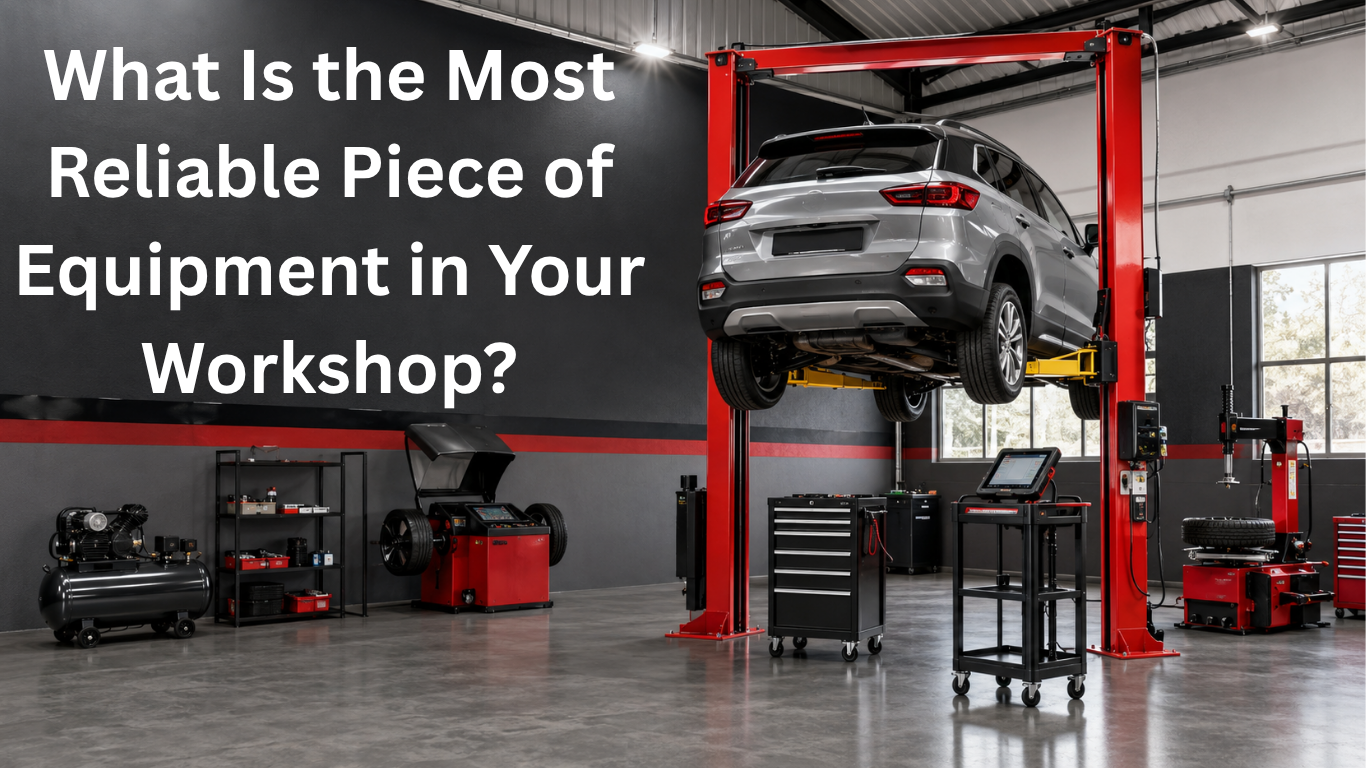
If We Had to Choose One, It Would Be the Vehicle Lift

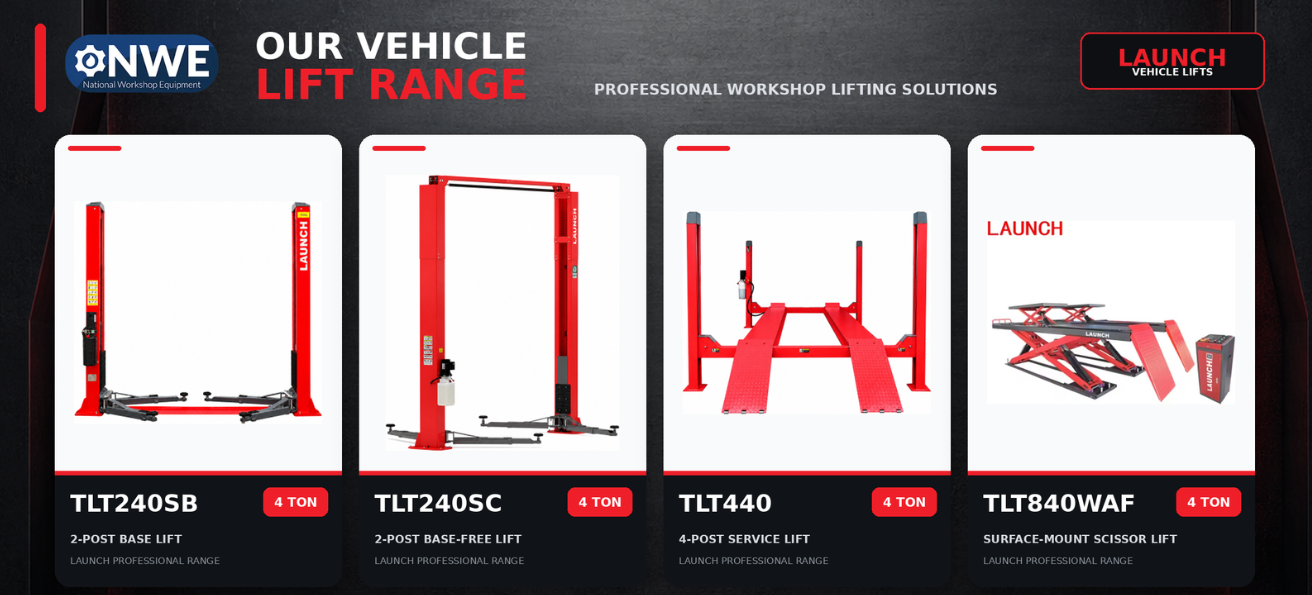
1.What Is the Most Reliable Piece of Equipment in Your Workshop Lift Range

For most mechanical workshops, the vehicle lift is one of the hardest-working and most important pieces of equipment on the floor.

It provides technicians with access to brakes, suspension systems, exhausts, steering components, transmissions and underbody areas. When a lift is unavailable, an entire service bay can become unproductive.

More importantly, a lift is also a critical safety system. It supports the weight of a vehicle while technicians work underneath it. There is no room for unreliable operation, damaged components or neglected safety mechanisms.

Professional workshops should therefore choose a lift with the correct capacity, safety features and configuration for the vehicles they regularly service. NWE supplies a range of professional vehicle lifts and automotive hoists for passenger vehicles, SUVs, bakkies, commercial vehicles and wheel-alignment applications.

Reliable lifting equipment also depends on correct installation. The concrete floor, anchor points, electrical supply, positioning and final commissioning all affect the safety and long-term performance of the lift.

NWE provides professional vehicle hoist installation, servicing and safety inspections throughout South Africa.

The Air Compressor: The Heart of Many Workshops

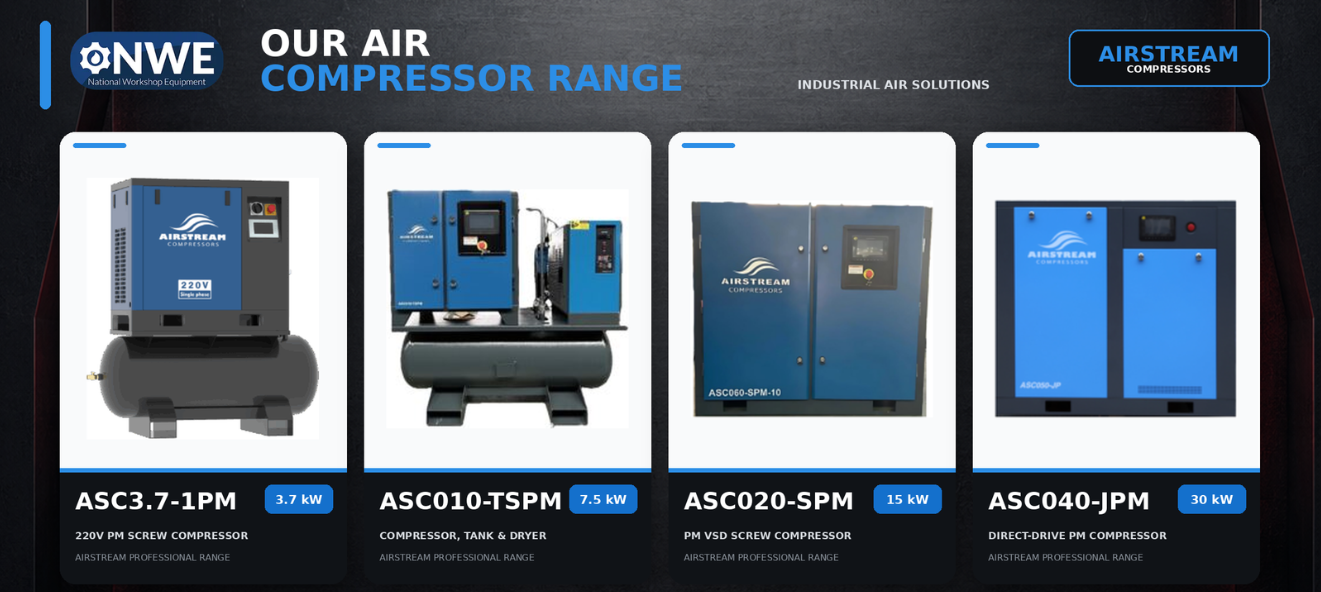
Although the vehicle lift may take the top position, the air compressor is another strong contender.

Compressed air is used for impact wrenches, tyre inflation, tyre-changing equipment, air tools, cleaning and other workshop processes. When the compressor fails, several workstations can be affected at the same time.

A reliable compressor must be correctly sized for the workshop’s air demand. An undersized machine may run continuously, struggle to maintain pressure and experience premature wear. An oversized or inefficient compressor can unnecessarily increase electricity costs.

Regular servicing is equally important. Air leaks, contaminated oil, moisture, blocked filters and pressure loss reduce performance and increase operating expenses.

Workshops can explore NWE’s range of professional air compressors and compressed-air equipment or arrange compressor maintenance through NWE’s service department.

Diagnostic Equipment That Helps You Get It Right the First Time

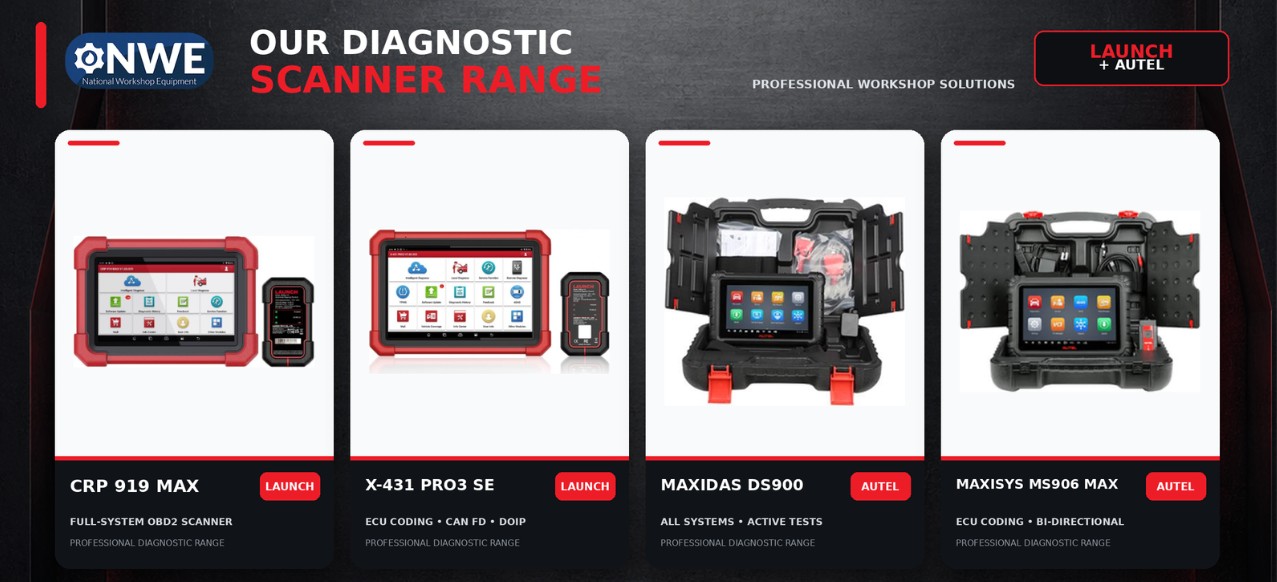
3.What Is the Most Reliable Piece of Equipment in Your Workshop Vehicle Diagnostics range

Modern vehicles depend heavily on electronic control systems. Without dependable diagnostic equipment, technicians may spend hours tracing faults or replace components unnecessarily.

Professional automotive diagnostic equipment allows technicians to access fault codes, live vehicle data, service functions and system tests. The correct diagnostic platform can reduce investigation time and help workshops provide customers with more accurate repair recommendations.

However, diagnostic reliability is not only about the physical scan tool. Software coverage, updates, compatible connectors, technical knowledge and support all contribute to its usefulness.

The best diagnostic machine is the one that suits the vehicles your workshop services and provides the functions your technicians actually need.

Reliable Tyre Service Equipment Keeps Jobs Moving

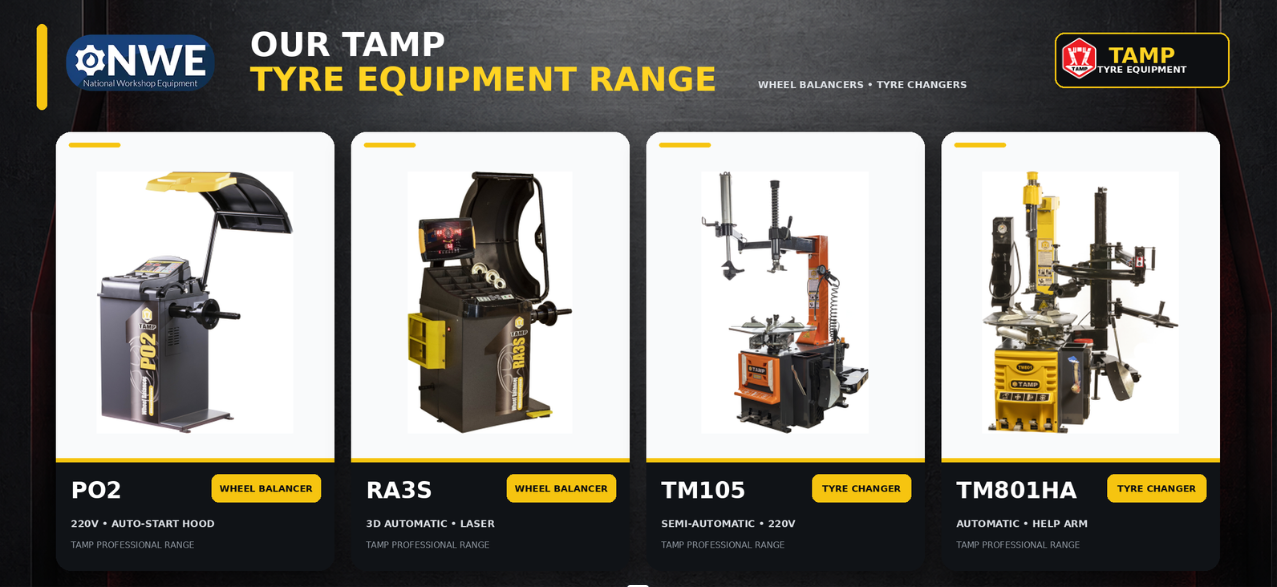
2.What Is the Most Reliable Piece of Equipment in Your Workshop Tamp Tyre Equipment range

In a tyre fitment centre, the answer to our original question may be completely different.

A dependable tyre changer and an accurate wheel balancer are essential for maintaining workflow. A slow, damaged or poorly calibrated machine can delay every vehicle that enters the fitment bay.

Quality tyre service equipment helps technicians work efficiently while reducing the risk of damaging tyres, rims or sensors. The equipment should also be selected according to the wheel sizes, tyre profiles and vehicle types the business handles.

NWE supplies a comprehensive range of TAMP tyre service equipment for passenger, commercial and heavy-duty applications.

Do Not Overlook the Tools Used Every Day

Large machines usually receive the most attention, but basic hand tools are often the most frequently used equipment in a workshop.

A reliable socket, torque wrench, spanner or impact tool may complete hundreds of tasks every week. Poor-quality tools can slip, break, damage fasteners and increase the risk of injury.

Professional-quality tools should be comfortable to use, suitable for repeated workshop use and properly stored after each job. NWE stocks a wide range of King Tony professional workshop tools for automotive technicians, maintenance teams and industrial users.

Seven Factors That Make Workshop Equipment Reliable

Regardless of the machine, long-term reliability normally depends on seven key factors:

  1. Correct equipment selection — The machine must be suitable for the vehicles, workloads and services offered by the workshop.
  2. Professional installation — Poor installation can compromise even high-quality equipment. Vehicle lifts, compressors and workshop systems must be positioned, connected and commissioned correctly.
  3. Preventative maintenance — Waiting for equipment to fail is expensive. Scheduled maintenance can identify wear, leaks, damaged components and performance problems before they cause a complete breakdown.
  4. Daily operator checks — Technicians should report unusual noises, leaks, damaged cables, loose components, inconsistent movement or safety systems that do not engage correctly.
  5. Proper operator training — Incorrect operation places unnecessary strain on equipment and may create serious safety risks.
  6. Replacement parts and technical support — Equipment is only useful if parts, servicing and knowledgeable technical assistance remain available after the sale.
  7. A dependable supplier — Buying equipment from a recognised supplier provides access to professional advice, genuine equipment, installation assistance and after-sales support.

Warning Signs Your Equipment Needs Attention

Do not ignore equipment that:

  • Operates more slowly than usual.
  • Produces unusual noises or vibration.
  • Leaks hydraulic fluid, oil or compressed air.
  • Struggles to maintain pressure.
  • Moves unevenly or inconsistently.
  • Gives inaccurate or inconsistent readings.
  • Has damaged cables, hoses, locks or safety components.
  • Regularly trips electrical protection.
  • Requires repeated temporary repairs.

If equipment is behaving unpredictably, stop using it where continued operation could endanger technicians, customers or vehicles. Arrange a professional assessment before the problem becomes a more expensive failure.

Reliability Comes From the Equipment and the Support Behind It

4.What Is the Most Reliable Piece of Equipment in Your Workshop Compressor range

The most reliable workshop equipment is supported throughout its working life.

Since 1999, National Workshop Equipment has supplied automotive workshops, dealerships, fitment centres and fleet operators with professional workshop equipment across South Africa.

NWE’s offering includes vehicle lifts, tyre service equipment, diagnostic tools, wheel-alignment systems, air compressors, lubrication systems, cleaning equipment and professional workshop tools. Customers also have access to workshop planning, equipment installation, servicing, maintenance and technical support.

Whether you are replacing one unreliable machine or planning a complete workshop upgrade, the correct equipment and ongoing support can help reduce downtime and protect your investment.

Browse NWE’s complete workshop equipment range or contact National Workshop Equipment for advice on selecting, installing or servicing equipment for your workshop.

Frequently Asked Questions

What is the most important equipment in an automotive workshop?

This depends on the services offered. For a general mechanical workshop, the vehicle lift is often the most important because it affects technician access, productivity and safety. In a tyre fitment centre, the tyre changer and wheel balancer may be more important.

What makes workshop equipment reliable?

Quality construction, correct equipment selection, professional installation, proper operator training, regular maintenance and access to parts and technical support all contribute to reliability.

How can a workshop reduce equipment breakdowns?

Introduce daily operator checks, follow the manufacturer’s servicing schedule and repair minor problems before they develop into complete equipment failures.

Should old workshop equipment be repaired or replaced?

The decision should consider the cost of repair, equipment age, safety, parts availability, energy consumption and the effect of repeated downtime. NWE can assess equipment and recommend servicing, repair or replacement where appropriate.

Filed Under: News Tagged With: NWE

nwe footer logo

The leaders in workshop equipment sales since 1999

About Us

Established in February 1999, National workshop equipment South Africa brings over 20 years of expertise in the workshop equipment industry. Read More

Navigation
  • Home
  • Shop Online
  • Services
  • Become an Agent
  • About Green Machine
  • Contact Us
  • Shipping Policy
  • Return Policy
  • Privacy Policy
Social Media
NWE Facebook NWE Instagram
Green Machine Green Machine

Copyright © 2026 · Powered by Rokkit Digital