• Skip to primary navigation
  • Skip to main content

NWE

Johannesburg:JHB: 010 001 1493 | Durban H/O:DBN H/O: 031 709 3632 | Whatsapp 060 012 5991

Hello, Login
0
R0.00
NWE Logo
×
SHOP ONLINE
  • Home
  • Shop Online
  • Services
  • Green Machine
    • About the Green Machine Waterless Car Wash System
      • Why Use Green Machine
      • What You Get In Your Green Machine
      • About The Wax
      • How It Works
      • Accessories
    • Green Machine Compact
    • Corporate & Retail
      • About Corporate & Retail
    • Motor Car Dealerships Leasing Options
  • About Us
  • Distributor Agent
  • Finance
  • Blog
  • Gallery
  • Contact Us
  • Videos

National Workshop Equipment

Electric Vehicles in South Africa: How Workshops Can Prepare for the Future

July 3, 2026 By Rokkit

Electric Vehicles in South Africa: How Workshops Can Prepare for the Future | NWE

Electric Vehicles in South Africa: How Workshops Can Prepare for the Future

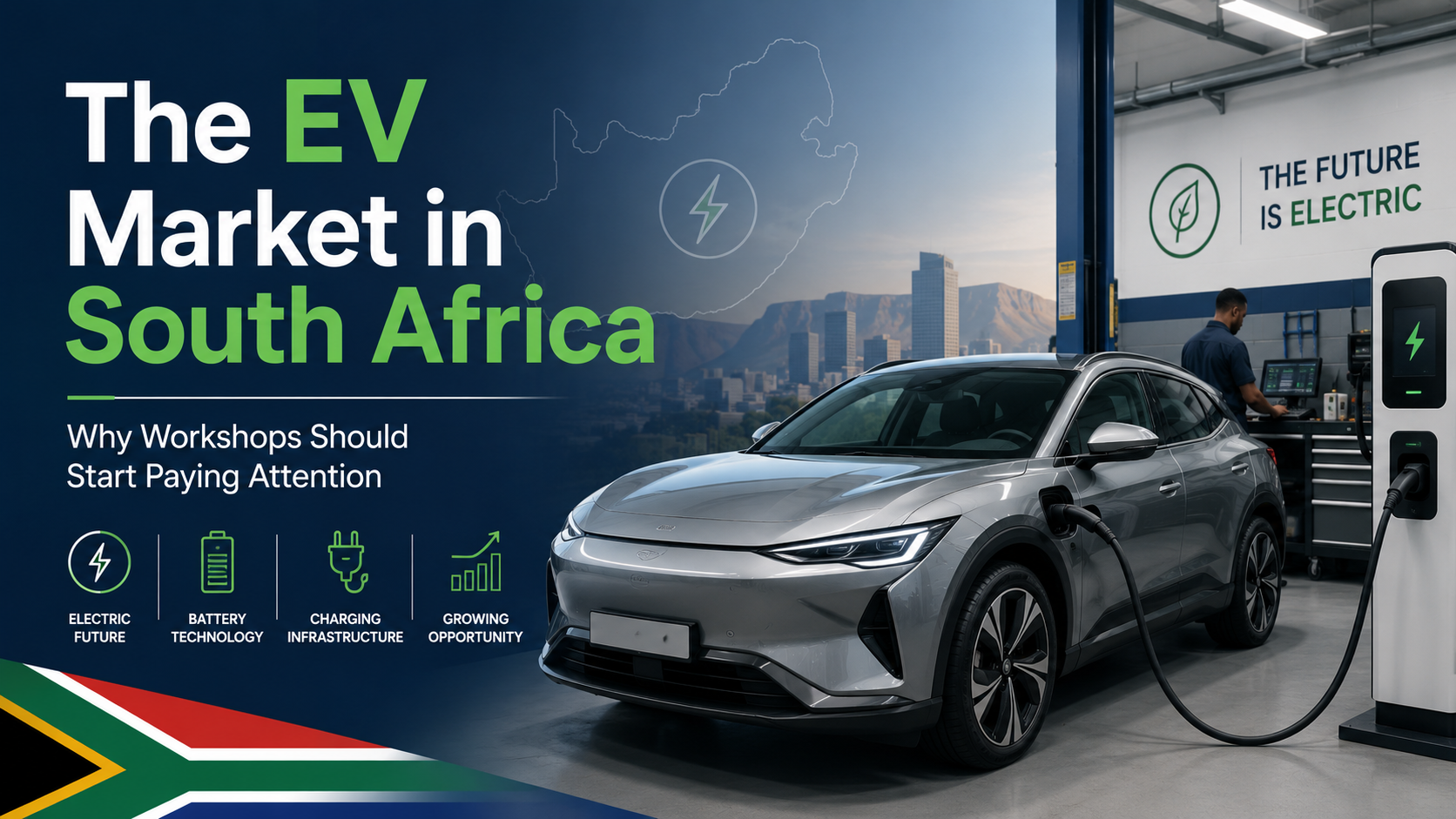
Technician servicing an electric vehicle using professional EV workshop equipment in South Africa

The Future of Automotive Servicing Starts Today

The automotive industry has always evolved. From carburettors to electronic fuel injection, from manual diagnostics to sophisticated onboard computers, every technological advancement has required workshops to adapt. Electric vehicles (EVs) represent the next major evolution, bringing new opportunities, new challenges, and new expectations for workshops across South Africa.

While petrol and diesel vehicles continue to dominate local roads, the growth of hybrid and battery electric vehicles is gradually changing the servicing landscape. Vehicle manufacturers are expanding their electric vehicle offerings, businesses are beginning to evaluate electric fleets, and consumers are becoming increasingly aware of alternative powertrain technologies. As this transition continues, workshops that prepare early will be better positioned to meet changing customer needs and remain competitive.

Preparing for electric vehicles does not mean abandoning traditional workshop services. South Africa’s vehicle fleet will continue to include petrol and diesel vehicles for many years, meaning workshops must be capable of servicing multiple vehicle technologies simultaneously. Instead, EV readiness is about expanding your capabilities, improving technician knowledge, enhancing workshop safety, and investing strategically in equipment that supports both current and future servicing requirements.

For workshop owners, service managers, dealership groups, fleet maintenance facilities, and independent repair centres, the question is no longer whether electric vehicles will become part of the industry. The real question is how prepared your workshop will be when more customers begin driving them through your doors.

The Current State of Electric Vehicles in South Africa

Electric vehicles are becoming an increasingly visible part of South Africa’s automotive market. Although they still account for a relatively small proportion of total vehicle sales compared with petrol and diesel vehicles, the number of available models continues to grow as global manufacturers expand their electrified vehicle ranges.

Several well-known automotive brands now offer electric or hybrid models in South Africa, including BMW, Volvo, Mercedes-Benz, MINI, BYD, GWM, Toyota, Lexus, and others. At the same time, charging infrastructure continues to improve in major metropolitan areas and along key national travel routes, making EV ownership more practical than it was only a few years ago.

Hybrid electric vehicles (HEVs) and plug-in hybrid electric vehicles (PHEVs) have also gained traction locally. These vehicles combine conventional internal combustion engines with electric drive systems, allowing drivers to benefit from improved fuel efficiency while easing concerns around charging infrastructure and driving range.

Despite this progress, South Africa’s transition to electric mobility is expected to be gradual. Factors such as vehicle purchase costs, charging infrastructure, electricity supply, and consumer adoption all influence the pace of change. However, gradual growth should not be confused with slow progress. Every year, more electrified vehicles enter the market, and every year, workshops become more likely to encounter them during routine servicing, diagnostics, and repairs.

For workshop owners, this presents an opportunity to prepare in a structured and strategic way. Rather than reacting once electric vehicles become commonplace, businesses can begin building the skills, equipment, and processes needed to confidently service these vehicles as demand increases.

Why Workshops Should Prepare Before Demand Peaks

One of the biggest mistakes any business can make is waiting until market demand forces change. By then, competitors who invested earlier often enjoy a significant advantage.

The same principle applies to electric vehicle servicing.

Preparing today allows workshops to develop expertise gradually, spread investment over time, and build technician confidence before EV servicing becomes a routine part of daily operations.

There are several reasons why early preparation makes good business sense.

Customer Expectations Are Changing

Vehicle owners expect modern workshops to keep pace with advances in automotive technology. Customers increasingly assume that professional workshops are equipped to service a wide range of vehicle types, including hybrids and electric vehicles.

Even if a workshop is not yet performing major EV repairs, being able to diagnose faults, carry out inspections, and perform routine maintenance demonstrates professionalism and builds customer confidence.

Technology Continues to Evolve

Modern vehicles rely on sophisticated electronics, software, sensors, and communication networks. Electric vehicles simply take this technological evolution one step further.

Many of the diagnostic skills, software platforms, and electronic servicing procedures used for electric vehicles also improve a workshop’s ability to diagnose and repair modern petrol and diesel vehicles. Investing in advanced diagnostic capabilities therefore benefits the workshop, not only its EV servicing capabilities.

Training Takes Time

Developing competent technicians cannot happen overnight.

Understanding high-voltage systems, battery management, manufacturer service procedures, and EV safety protocols requires structured learning and practical experience.

By starting early, workshops can introduce training gradually, allowing technicians to build confidence while continuing to support existing customers.

Equipment Is a Long-Term Investment

Specialised workshop equipment represents an investment in the future of the business.

Rather than purchasing everything at once, workshops can develop an equipment roadmap that aligns with anticipated growth. This phased approach allows businesses to invest strategically while avoiding unnecessary expenditure.

Understanding Electric Vehicle Technologies

Before investing in equipment or technician training, it is important to understand the different types of electrified vehicles currently found on South African roads.

Although they are often grouped together under the term “electric vehicles,” several different technologies exist, each with unique servicing requirements.

Battery Electric Vehicles (BEVs)

Battery Electric Vehicles are powered entirely by electricity stored within high-voltage battery packs. These vehicles use one or more electric motors to drive the wheels and do not have a conventional internal combustion engine.

Because there is no engine oil, fuel system, exhaust system, or gearbox in the traditional sense, servicing requirements differ significantly from conventional vehicles. However, many other components—including suspension, steering, brakes, tyres, and climate control systems—still require regular inspection and maintenance.

Technicians working on BEVs must also understand battery management systems, charging systems, thermal management, and high-voltage safety procedures.

Hybrid Electric Vehicles (HEVs)

Hybrid Electric Vehicles combine a petrol engine with an electric motor and battery system.

Unlike fully electric vehicles, the battery is recharged automatically through regenerative braking and engine operation rather than being plugged into an external charging source.

From a servicing perspective, hybrid vehicles require technicians to understand both conventional mechanical systems and high-voltage electrical systems, making them an important stepping stone towards full EV servicing capability.

Plug-in Hybrid Electric Vehicles (PHEVs)

Plug-in Hybrid Electric Vehicles combine characteristics of both hybrid and battery electric vehicles.

Their larger battery packs allow for extended electric-only driving before the petrol engine provides additional range when needed.

Because these vehicles contain both high-voltage electrical systems and traditional engine components, workshops must be capable of servicing two different powertrain technologies within a single vehicle.

How Electric Vehicles Are Changing Workshop Operations

For decades, vehicle servicing centred around mechanical systems such as engines, transmissions, fuel systems, cooling systems, and exhaust components. While these systems remain important for petrol and diesel vehicles, electric vehicles introduce an entirely different layer of technology that requires workshops to expand their knowledge and capabilities.

Rather than relying on complex combustion engines, battery electric vehicles use high-voltage battery packs, electric drive motors, power inverters, onboard chargers, sophisticated thermal management systems, and advanced software that continuously monitors vehicle performance.

This shift means today’s technicians are increasingly required to understand both mechanical engineering and electrical systems. Workshops that embrace this evolution will be better equipped to provide efficient, accurate, and safe servicing for the next generation of vehicles.

Importantly, many of the skills and technologies associated with EV servicing also benefit the servicing of modern petrol, diesel, and hybrid vehicles. Advanced diagnostics, electronic fault-finding, software updates, and battery testing are becoming standard practice across the automotive industry, making investment in these capabilities valuable regardless of the vehicle’s powertrain.

High-Voltage Safety: Protecting Your Technicians and Your Business

One of the biggest differences between servicing conventional vehicles and electric vehicles is the presence of high-voltage electrical systems.

Most petrol and diesel passenger vehicles operate on a 12-volt electrical system, with some commercial vehicles using 24 volts. Electric vehicles, however, typically operate using battery systems ranging from approximately 200 volts to more than 800 volts, depending on the manufacturer and vehicle architecture.

These systems require a completely different approach to workshop safety.

Unlike a conventional vehicle, simply switching the ignition off does not necessarily make an electric vehicle safe to work on. High-voltage components can retain stored electrical energy, and incorrect servicing procedures may expose technicians to unnecessary risks.

For this reason, technicians should only perform high-voltage work after receiving appropriate training and always follow the manufacturer’s specified procedures.

Building a Safe EV Workshop

Preparing a workshop for electric vehicle servicing should begin with a comprehensive review of workplace safety.

This includes:

  • Identifying areas where high-voltage work may take place.
  • Establishing clear servicing procedures.
  • Ensuring technicians understand vehicle isolation procedures.
  • Providing suitable insulated tools where required.
  • Supplying appropriate personal protective equipment (PPE).
  • Displaying high-voltage warning signage where appropriate.
  • Developing emergency response procedures.
  • Maintaining accurate service documentation.

A strong safety culture protects not only technicians but also customers, workshop equipment, and the long-term reputation of the business.

Following Manufacturer Procedures

Every vehicle manufacturer designs its electric vehicles differently.

Battery locations, isolation procedures, lifting points, service disconnects, software requirements, and repair methods can vary significantly between brands and even between different models from the same manufacturer.

For this reason, technicians should never rely on assumptions or previous experience alone.

Manufacturer-approved service information should always be consulted before carrying out maintenance, diagnostics, or repairs.

Following approved procedures helps reduce the risk of component damage while ensuring servicing is completed safely and correctly.

Vehicle Lifting Considerations for Electric Vehicles

Vehicle lifting is a routine part of workshop operations, but electric vehicles introduce several important considerations that technicians must understand.

Most battery electric vehicles carry a large battery pack beneath the floor of the vehicle. This battery pack often forms part of the vehicle’s structural design and can represent one of its heaviest components.

Incorrect lifting techniques may place unnecessary stress on the battery enclosure or surrounding structural components.

Before lifting any electric vehicle, workshops should:

  • Confirm the manufacturer’s recommended lifting points.
  • Verify the lifting capacity of the vehicle lift.
  • Ensure lifting pads are correctly positioned.
  • Inspect lifting equipment regularly.
  • Follow all manufacturer servicing recommendations.

Electric vehicles also tend to weigh more than comparable petrol or diesel vehicles because of their battery systems. As larger electric SUVs, commercial vehicles, and light delivery vehicles become more common, workshops should consider whether their existing lifting equipment is suitable for servicing heavier vehicle platforms.

Planning for future vehicle weights today can help avoid equipment limitations as the market continues to evolve.

Why Advanced Diagnostics Are Essential

Modern vehicles generate vast amounts of electronic data.

Every journey, charging cycle, battery event, and vehicle function is monitored by numerous electronic control units (ECUs). Electric vehicles depend on this information even more than conventional vehicles.

As a result, diagnostics have become one of the most important aspects of modern workshop operations.

Rather than relying solely on mechanical inspections, technicians increasingly use professional diagnostic equipment to communicate with vehicle systems, retrieve fault codes, monitor live data, perform software functions, and verify repairs.

What EV Diagnostics Can Help Identify

Professional diagnostic platforms can assist technicians in evaluating:

  • Battery health and condition.
  • Charging system performance.
  • Battery Management System (BMS) information.
  • Electric motor operation.
  • High-voltage system faults.
  • Thermal management performance.
  • Regenerative braking systems.
  • Vehicle communication networks.
  • Electronic control unit functions.

Accurate diagnostics allow workshops to identify faults more efficiently, reduce unnecessary parts replacement, and improve first-time repair success.

For customers, this translates into shorter repair times and greater confidence in the workshop’s technical capabilities.

Essential EV Workshop Equipment

Preparing for electric vehicle servicing is not about replacing every tool in the workshop. Instead, it involves identifying where specialised equipment adds value, improves safety, and supports efficient servicing.

A workshop’s exact equipment requirements will depend on the services it intends to offer, but several categories of equipment are becoming increasingly important.

Professional EV Diagnostic Equipment

Diagnostic equipment forms the foundation of modern EV servicing.

Professional scan tools allow technicians to communicate with vehicle systems, perform guided diagnostics, monitor battery performance, carry out software functions, and access manufacturer-specific information where supported.

Reliable diagnostics improve workshop efficiency while reducing unnecessary component replacement.

EV Battery Lifting Equipment

Battery packs can weigh several hundred kilograms and should always be handled using suitable lifting equipment designed for the task.

Purpose-built battery lifting platforms provide controlled movement and accurate positioning, allowing technicians to safely remove and reinstall battery assemblies during approved servicing procedures.

Proper lifting equipment also reduces the risk of technician injury and accidental component damage.

High-Voltage Testing Equipment

Before working on certain electrical systems, technicians may need to verify insulation resistance or confirm that high-voltage systems have been correctly isolated in accordance with manufacturer procedures.

Specialised testing equipment supports these processes while contributing to a safer workshop environment.

Battery Maintenance Equipment

Battery charging, balancing, and maintenance equipment can assist workshops when carrying out manufacturer-approved servicing procedures on battery systems.

Selecting equipment designed specifically for electric vehicles helps improve efficiency while supporting accurate maintenance.

Intelligent Power Supply Systems

Modern vehicles often require stable voltage during programming, software updates, or diagnostic procedures.

Professional intelligent power supplies help maintain consistent voltage throughout these operations, reducing the risk of interrupted programming and supporting reliable workshop processes.

Preparing Your Workshop with Launch EV Solutions

As South Africa’s automotive industry continues to evolve, workshops require equipment that keeps pace with changing vehicle technology.

National Workshop Equipment (NWE) offers a specialised range of Launch EV Solutions designed to support workshops preparing for electric and hybrid vehicle servicing.

The range includes professional solutions such as:

  • EV diagnostic equipment.
  • Battery lifting platforms.
  • EV battery pack lifts.
  • Insulation resistance testers.
  • Battery charging and maintenance equipment.
  • Battery cell balancing equipment.
  • EV maintenance tool carts.
  • Intelligent workshop power supplies.

These solutions are designed to help workshops improve safety, increase productivity, and support technicians working on increasingly advanced vehicle technologies.

Explore the complete Launch EV Solutions range: Launch EV Solutions

Technician Training: The Most Valuable Investment Your Workshop Can Make

Technology alone does not prepare a workshop for the future—people do.

No matter how advanced a workshop’s equipment may be, it is only as effective as the technicians using it. As electric and hybrid vehicles become more common in South Africa, ongoing technician training will become one of the most important investments a workshop can make.

Unlike traditional vehicles, EVs require technicians to understand electrical systems, software, battery technology and manufacturer-specific servicing procedures alongside conventional mechanical knowledge. Developing these skills takes time, which is why workshops should begin investing in training before demand becomes widespread.

Technicians servicing electric and hybrid vehicles should develop competency in areas such as:

  • High-voltage awareness and safety.
  • Safe vehicle isolation procedures.
  • Battery Management Systems (BMS).
  • Electric motors and power electronics.
  • Charging systems.
  • Thermal management systems.
  • EV diagnostics.
  • Manufacturer-approved repair procedures.
  • Battery removal and installation techniques.

Continuous learning is equally important. Vehicle manufacturers regularly introduce new software, battery technologies and servicing procedures, making ongoing professional development essential for workshops that want to remain competitive.

Rather than attempting to train every technician simultaneously, many successful workshops begin by developing one or two EV specialists who can support the wider team as demand increases. This staged approach allows workshops to build internal expertise while managing training costs effectively.

Future-Proofing Your Workshop

Every successful workshop has adapted to change throughout its history.

Fuel injection replaced carburettors.

Electronic diagnostics replaced many traditional fault-finding methods.

Advanced Driver Assistance Systems (ADAS) introduced calibration procedures that did not exist a decade ago.

Electric vehicles represent the next chapter in that evolution.

Future-proofing a workshop does not mean predicting exactly how quickly EV adoption will occur. Instead, it means ensuring the business has the knowledge, equipment and flexibility to adapt as customer needs change.

Workshops that prepare today will be well positioned to service:

  • Petrol vehicles.
  • Diesel vehicles.
  • Mild hybrid vehicles.
  • Hybrid electric vehicles.
  • Plug-in hybrid vehicles.
  • Battery electric vehicles.

This diversified capability creates resilience by allowing workshops to support customers regardless of the technology they drive.

Future-proofing should be viewed as an ongoing process rather than a single investment.

Practical steps include:

  • Reviewing workshop capabilities annually.
  • Investing in technician development.
  • Expanding diagnostic capabilities.
  • Introducing specialised EV equipment where appropriate.
  • Monitoring developments in automotive technology.
  • Building relationships with trusted equipment suppliers.

These actions not only prepare workshops for electric vehicles but also strengthen the overall quality and professionalism of the business.

Why the Right Equipment Partner Matters

Purchasing workshop equipment is rarely a short-term decision. Professional equipment is expected to perform reliably for many years while supporting technician productivity and delivering consistent results.

When selecting EV workshop equipment, workshops should consider more than just the purchase price.

Key considerations include:

Product Quality

Professional-grade equipment is designed for frequent workshop use and should provide reliable performance over its operational life.

Technical Support

Access to product knowledge, technical assistance and after-sales support can significantly improve equipment ownership and reduce downtime.

Training

Some advanced equipment may require operator training to ensure technicians use it safely and effectively.

Software Updates

As vehicle technology evolves, diagnostic equipment often requires software updates to maintain compatibility with newer vehicle models.

Future Expansion

Choosing equipment that supports future workshop growth allows businesses to expand their EV servicing capabilities progressively rather than replacing equipment unnecessarily.

Working with an experienced workshop equipment supplier can help workshops make informed purchasing decisions based on their current requirements and long-term business goals.

Supporting South African Workshops for the Future

For more than 20 years, National Workshop Equipment has supplied professional workshop equipment to businesses throughout South Africa.

As vehicle technology continues to evolve, NWE remains committed to helping workshops prepare for new servicing requirements by offering equipment designed for modern automotive environments.

The Launch EV Solutions range includes products that support electric and hybrid vehicle servicing, including:

  • Professional EV diagnostic equipment.
  • Battery lifting platforms.
  • EV battery pack lifts.
  • Insulation resistance testers.
  • Battery charging and maintenance equipment.
  • Battery cell balancing systems.
  • Intelligent workshop power supplies.
  • EV maintenance tool carts.

Whether a workshop is taking its first steps towards EV readiness or expanding existing capabilities, selecting appropriate equipment can improve workshop efficiency, technician confidence and overall safety.

Explore the complete range of Launch EV Solutions here: Launch EV Solutions

If you would like assistance selecting the right equipment for your workshop, the experienced team at National Workshop Equipment is available to help.

Contact us today: Contact Us

Frequently Asked Questions

Are electric vehicles becoming more common in South Africa?

Yes. Although electric vehicles still represent a relatively small percentage of the overall vehicle market, the number of available EV and hybrid models continues to grow as manufacturers expand their product offerings in South Africa.

Do workshops need specialised equipment to service electric vehicles?

Many servicing procedures require specialised equipment such as professional diagnostic tools, battery lifting equipment, insulation resistance testers and high-voltage safety equipment. The exact equipment required depends on the type of work being performed.

Can existing vehicle lifts be used for electric vehicles?

In many cases, yes. However, workshops should always ensure that the lift has sufficient capacity and that technicians use the manufacturer’s recommended lifting points, particularly because many EVs have battery packs integrated into the vehicle floor.

Are electric vehicles more dangerous to work on?

Electric vehicles are not inherently more dangerous than conventional vehicles, but they require different safety procedures due to their high-voltage electrical systems. Proper training and manufacturer-approved servicing procedures are essential.

Why is EV diagnostic equipment important?

Electric vehicles rely heavily on electronic control systems and software. Professional diagnostic equipment enables technicians to accurately identify faults, monitor battery performance and perform manufacturer-approved diagnostic procedures.

What is a Battery Management System (BMS)?

A Battery Management System monitors and controls the operation of an electric vehicle’s battery pack. It helps manage battery health, charging, temperature and overall system performance.

Should independent workshops prepare for electric vehicles now?

Yes. Preparing gradually allows independent workshops to build knowledge, improve safety and expand their service capabilities as the number of electric and hybrid vehicles continues to increase.

How can workshops begin preparing for EV servicing?

A practical starting point includes technician training, reviewing safety procedures, investing in quality diagnostic equipment and introducing specialised EV servicing equipment as business requirements evolve.

Conclusion

Electric vehicles are steadily becoming part of South Africa’s automotive future. While the transition from traditional internal combustion engine vehicles will take time, workshops that begin preparing today will be better positioned to meet tomorrow’s servicing requirements.

Readiness is not achieved through equipment alone. It is built through knowledgeable technicians, safe working practices, reliable diagnostic capabilities and carefully selected workshop equipment that supports evolving vehicle technologies.

By investing strategically and adopting a long-term approach, workshops can confidently service a broader range of vehicles, strengthen customer trust and remain competitive in an industry that continues to evolve.

National Workshop Equipment is proud to support South African workshops with professional workshop solutions designed for today’s requirements and tomorrow’s opportunities.

Explore our Launch EV Solutions to discover equipment designed to support safe, efficient and professional electric vehicle servicing: Launch EV Solutions

For expert advice on selecting the right equipment for your workshop, contact the National Workshop Equipment team: Contact Us

Filed Under: News Tagged With: National Workshop Equipment

nwe footer logo

The leaders in workshop equipment sales since 1999

About Us

Established in February 1999, National workshop equipment South Africa brings over 20 years of expertise in the workshop equipment industry. Read More

Navigation
  • Home
  • Shop Online
  • Services
  • Become an Agent
  • About Green Machine
  • Contact Us
  • Shipping Policy
  • Return Policy
  • Privacy Policy
Social Media
NWE Facebook NWE Instagram
Green Machine Green Machine

Copyright © 2026 · Powered by Rokkit Digital